3D printing in plastic uses spools of plastic string (filament) as the raw material. The filament is melted and extruded layer by layer to build up the 3D shape that you want manufactured. Different filaments have different characteristics that make them suitable for particular purposes.
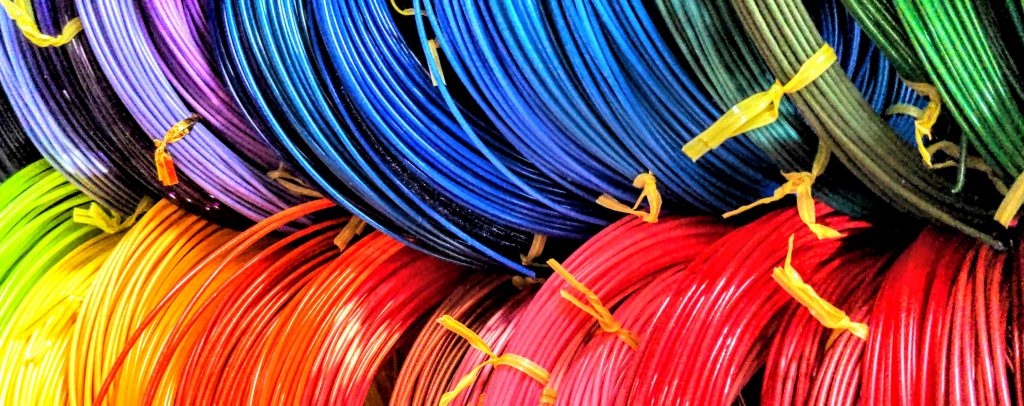
Common filaments we print with include PLA, PETG, ABS, HIPS, TPU, PC.
PLA – Polylactic Acid – easy-to-print, plastic made from corn starch, biodegradable. Comes in hundreds of colors and variations, PLA+, PLA-HT. Good for models and figures especially where mechanical or temperature resistance aren’t needed.
PETG – Polyethylene Terephthalate modified with Glycol – higher temperature resistance, used for printing technical and mechanical parts. Glossy surface, doesn’t shrink or warp.
ABS – Acrylonitrile Butadiene Styrene – Opaque, high temperature plastic, strong mechanical properties. Releases fumes, tends to curl.
HIPS – High Impact Polystyrene – lightweight, strong, structural plastic, relatively high temperature.
Flexibles (TPU, TPE) – Thermo Polyurethane/Thermoplastic Elastomer – Rubbery materials with a high elasticity. Used for bumpers, flexure joints, traction surfaces (tires).
PC – Polycarbonate – high-temperature, very strong, nearly transparent, very hygroscopic.
Each of these filaments requires different storage conditions, handling, nozzle temps and bed temperatures, bed surface/treatment (PEI, PVA, ABS slurry) to print successfully.
For those who are doing your own 3D printing, consider a Maker Box subscription (several options for amount and frequency) which will get you a wide variety of colors, mostly PLA, but a variety of other materials included as well.